Introduction
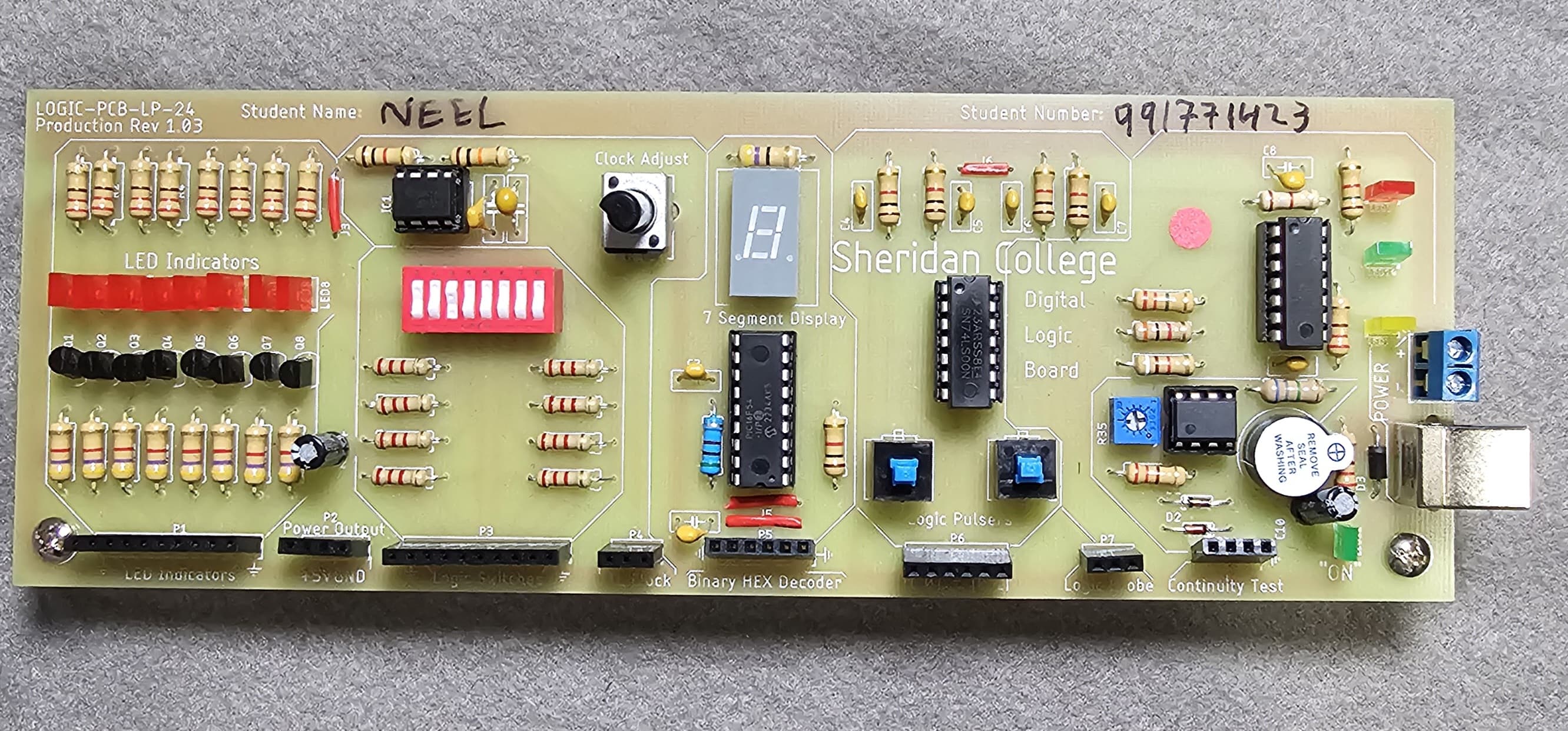
As part of my second-year Computer Engineering Technology coursework, I worked on assembling and testing the Logic PCB LP24. This project involved precise component placement, careful soldering, and verification of circuit functionality. In this blog, I will share my experience, including the assembly process, key challenges, and the final testing.
Understanding the Project
The primary objective of this project was to assemble the Logic PCB LP24 with high accuracy to ensure seamless operation. This required:
Proper placement of components based on their schematic labels.
Careful attention to color bands on resistors to avoid mismatches.
Understanding the circuit design and working principle before soldering.
Assembly and Soldering Process
Key Steps:
Component Placement: Each component was positioned based on the schematic, ensuring correct polarity and alignment.
Soldering: Precision was crucial while soldering to avoid incorrect connections, which could lead to circuit failure.
Error Handling: During the process, I encountered a soldering mismatch, requiring me to unsolder and resolder specific connections to ensure proper functionality.
Testing the Circuit
To validate the assembly, I conducted a test using an OR gate logic circuit:
Inputs: Two switches act as logic inputs.
Output: The circuit should produce a HIGH output when either or both switches are ON.
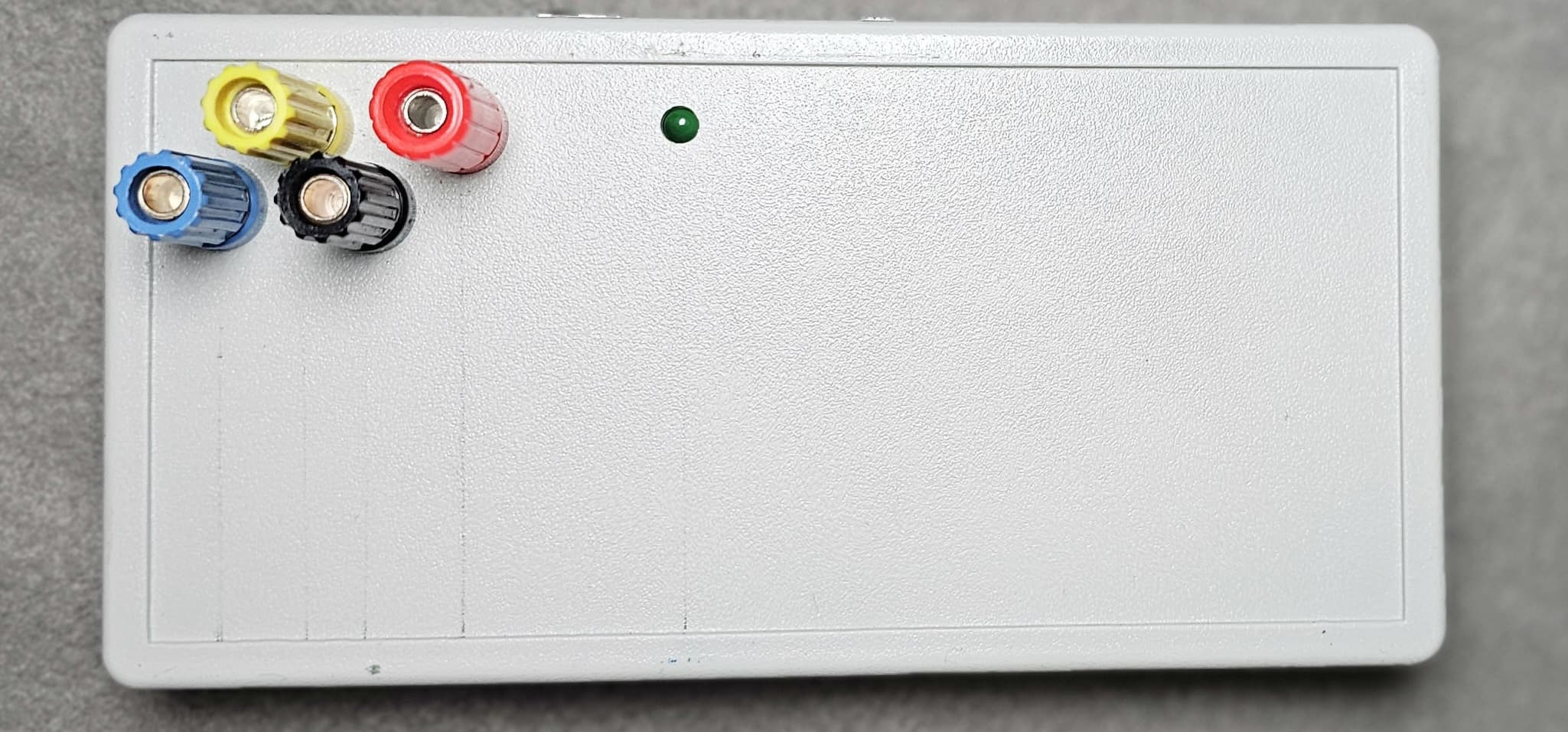
Power & Ground: Two wires provided necessary power and ground connections.
Test Cases:
Turning on the first switch → Output was HIGH
Turning on only the second switch → Output was HIGH
Turning on both switches → Output was HIGH
Both switches OFF → Output was LOW
This confirmed that the Logic PCB LP24 was functioning correctly.
Media
Conclusion
This project reinforced the importance of precise component placement, proper soldering techniques, and debugging skills. By carefully assembling the Logic PCB LP24 and testing its OR gate functionality, I gained valuable hands-on experience in electronics and circuit design. Such projects provide a solid foundation for understanding logical circuit operations in real-world applications.
Comments
Join the discussionNo comments yet. Be the first to comment.
Hardware Projects
In this series, I will document all the projects I have worked on and will work on whenever I get an opportunity-whether through class projects, external clubs, or hackathons.( initially it was named as robotics I changes it to hardware projects)